Entering Another World: The Razor-Sharp Labyrinth of Tsingy de Bemaraha
Imagine a landscape so sharp, so unforgiving, and so utterly alien that local folklore says you cannot walk here barefoot—literally. Welcome to Tsingy de Bemaraha, Madagascar’s incredible stone forest.
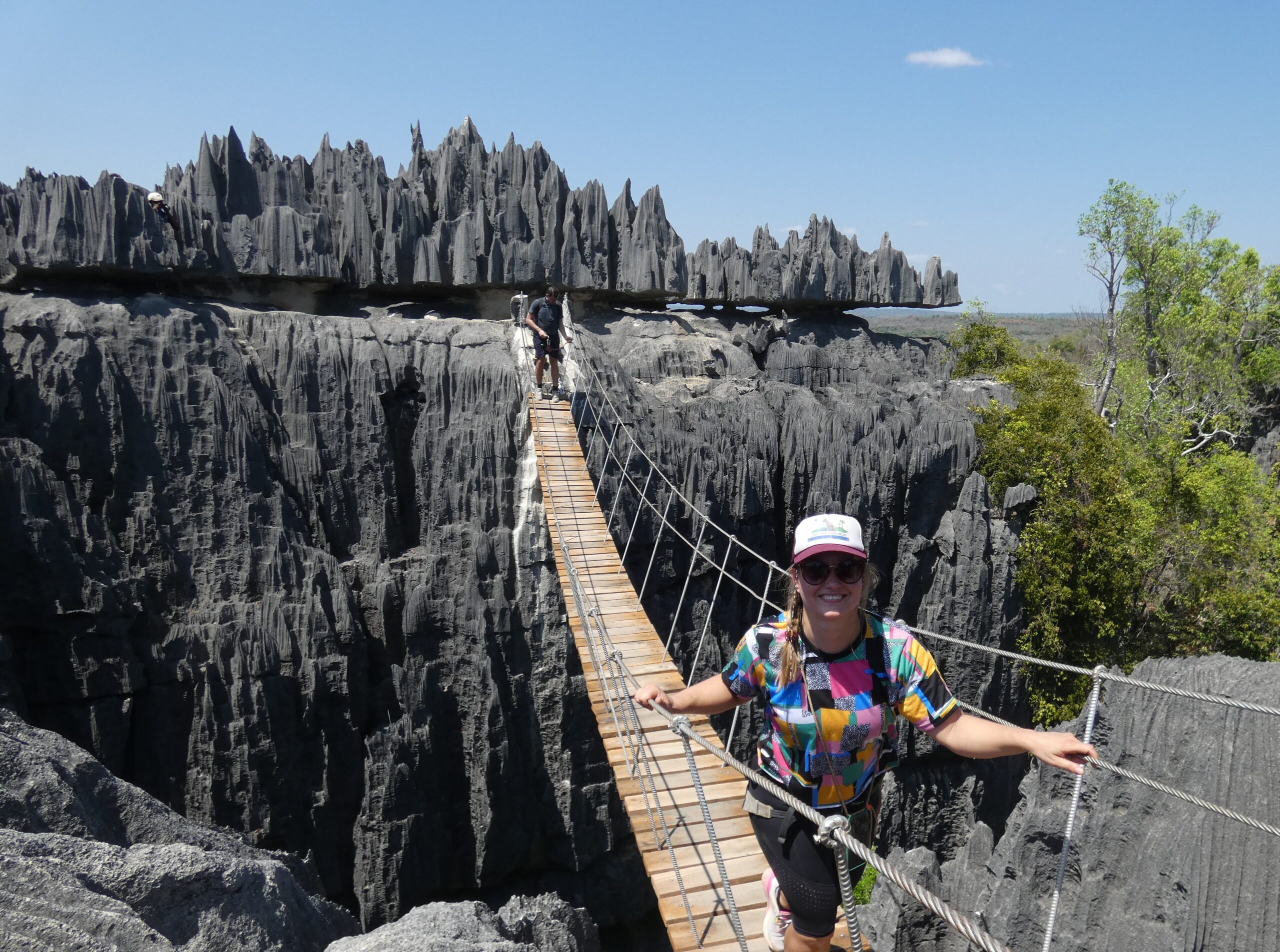
The word Tsingy translates from the Malagasy language to “where one cannot walk barefoot,” and it takes only one glance at this geological marvel to understand why. Stretching across the western coast of Madagascar, this UNESCO World Heritage site is a massive fortress of razor-sharp limestone pinnacles, deep canyons, and hidden caves.
If you are looking for an adventure that feels less like a vacation and more like a voyage to another planet, the Tsingy is calling.
How Nature Carved a Stone Forest
The story of the Tsingy began roughly 200 million years ago when the region was entirely underwater. Over millennia, a massive limestone seabed was uplifted by tectonic shifts. As the ocean receded, heavy tropical rains and groundwater went to work, eroding the softer rock and carving out deep fissures, caverns, and those signature needle-like peaks.
What remains today is a vertical labyrinth—a breathtaking cross between a gothic cathedral and a jagged fortress.
The Ultimate Adventure: What It’s Like to Hike the Tsingy
Hiking here isn’t your average walk in the park. It is a full-body experience that requires a harness, a helmet, and a bit of nerve.
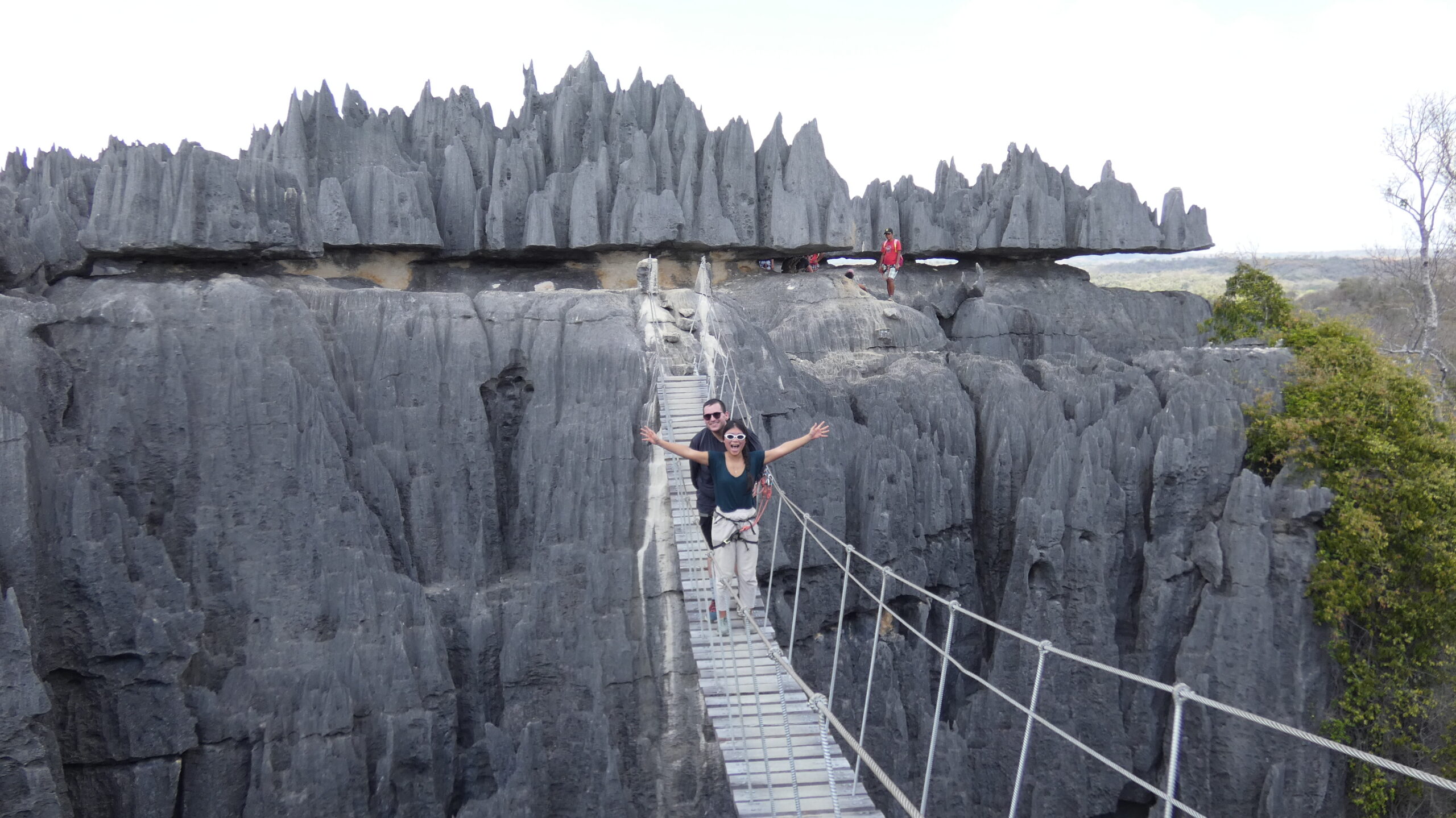
The Big Tsingy (with suspension bridge)
For the true thrill-seekers, the Grand Tsingy offers a demanding 4- to 5-hour trek. You’ll find yourself clipping into steel cables (via ferrata style), scaling vertical rock walls, squeezing through dark limestone caves, and crossing narrow, swaying suspension bridges suspended hundreds of feet above a jagged abyss. The reward? A view from the top that will leave you absolutely speechless.
The Gentle Approach
If heights aren’t your thing, the Small Tsingy offers a shorter, less grueling circuit near the park entrance. It still showcases the jaw-dropping topography and incredible views but without the intense vertical climbs.
Life on the Edge: The Species That Call It Home
You might think an environment made of razor-sharp rock would be devoid of life, but the Tsingy is actually a thriving, hyper-diverse ecosystem. Evolution has forced the local wildlife to adapt in fascinating ways.
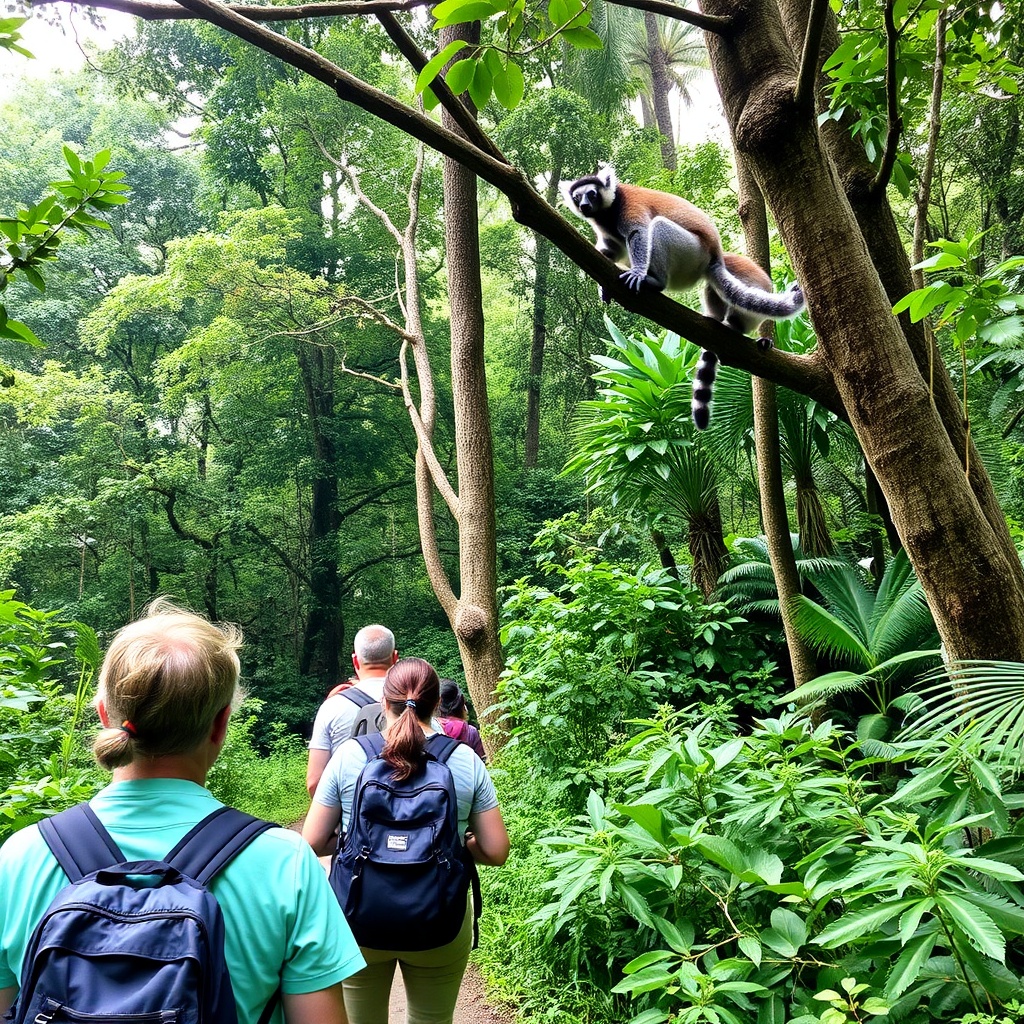
- The Decken’s Sifaka: These stunning white lemurs defy gravity, effortlessly leaping from one razor-sharp limestone pinnacle to another without getting a single scratch.
- Chameleons and Geckos: Look closely at the gray stone, and you might spot the incredibly camouflaged leaf-tailed gecko or the tiny Brookesia chameleon.
- Hidden Forests: Deep within the canyons, protected from the harsh sun and winds, lush pockets of green deciduous forests thrive, home to rare orchids and unique baobab species.
Essential Tips for Your Expedition
Pack the Right Gear: This is not the place for flimsy sneakers. You need sturdy hiking boots with excellent grip to handle the sharp terrain. Light, breathable clothing and high-quality gardening gloves (to protect your hands when gripping the sharp rocks) are highly recommended.
- Hire a Local Guide: You cannot enter the park without a certified local guide. They aren’t just there for safety; they are experts at spotting hidden wildlife and explaining the complex history of the region.
- Timing is Everything: The park is only accessible during the dry season, typically from April to November. During the rainy season, the dirt roads transform into impassable mud rivers, making the park completely unreachable.
- Hydrate, Hydrate, Hydrate: The stone forest acts like a giant solar oven, radiating heat. Carry plenty of water and sun protection.
Is the Tsingy Worth the Journey?
Getting to Tsingy de Bemaraha is half the adventure. It requires a bumpy, multi-day journey in a 4×4 vehicle from Morondava, crossing rivers on motorized ferries. But the moment you stand on a suspension bridge, looking out over a sea of stone needles while a white lemur leaps overhead, the long journey fades away.
There are very few places left on Earth that feel genuinely untouched and wild. The stone forest of Madagascar is one of them.
Knowledge Center
Latest Articles & Blog
-


Is Madagascar Safe for Tourists?
Is Madagascar Safe for Tourists? Madagascar is generally considered a safe destination for travelers. Millions of visitors enjoy the island every year without major problems.…
-

How to Get to Tsingy de Bemaraha
How to Get to Tsingy de Bemaraha National Park Tsingy de Bemaraha National Park is one of Madagascar’s most spectacular destinations and a UNESCO World…
-

Best Time to Visit Madagascar
Best Time to Visit Madagascar: A Month-by-Month Guide Madagascar is a year-round destination, but the best time to visit depends on the experiences you are…